
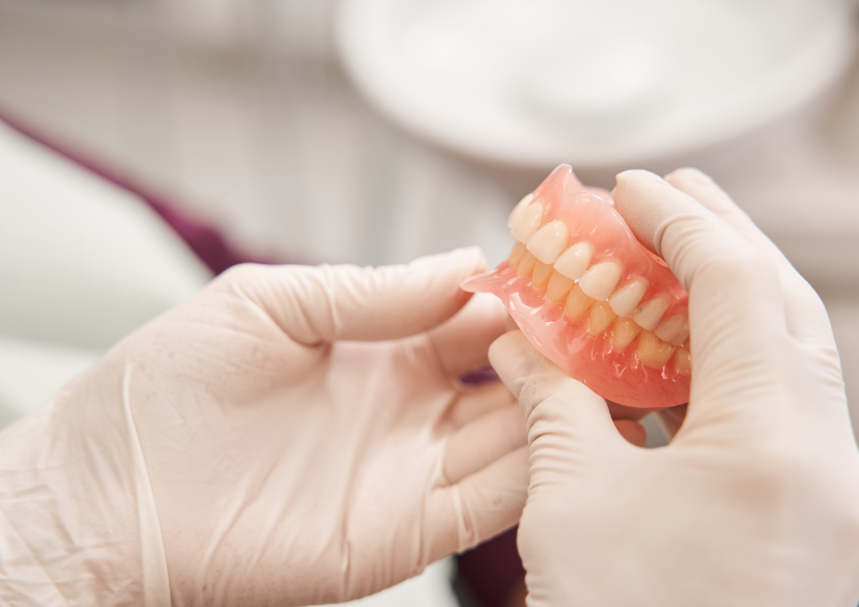
Dentures are a trusted solution for replacing missing teeth, helping restore your smile and basic chewing function. But if you wear dentures, you may have noticed changes in what—and how—you eat. Research suggests that dentures can affect nutrition, especially when they limit the types of foods you feel comfortable chewing. Understanding the connection between dentures and nutrition can help you make informed choices about your oral and overall health.
How Dentures Can Change the Way You Eat
Traditional dentures sit on top of the gums rather than being anchored into the jaw. While they can improve appearance and basic function, they don’t always provide the same stability as natural teeth. As a result, many denture wearers avoid foods that are hard, crunchy, or chewy.
Unfortunately, these avoided foods often include some of the most nutrient-dense options, such as raw fruits and vegetables, nuts, lean meats, and whole grains. Over time, relying more heavily on soft, processed foods may lead to lower intake of important nutrients like fiber, protein, vitamins, and minerals.
The Nutritional Impact of Limited Chewing Ability
When chewing becomes less effective, digestion can also be affected. Proper chewing is the first step in breaking down food so your body can absorb nutrients efficiently. Dentures that shift or feel uncomfortable may lead to swallowing larger pieces of food, which can place extra strain on the digestive system.
Studies have found that people who wear removable dentures may consume fewer fruits and vegetables and have lower levels of certain nutrients compared to those with natural teeth or implant-supported restorations. Over time, this can impact energy levels, muscle strength, and overall wellness.
Why Denture Stability Matters
One of the biggest challenges with traditional dentures is stability. Slipping or movement while eating can make meals stressful rather than enjoyable. This discomfort often reinforces food avoidance and limits dietary variety.
A more secure fit can make a meaningful difference. When dentures feel stable, people are more likely to enjoy a wider range of foods and maintain balanced eating habits that support long-term health.
How Implant-Supported Dentures May Help
Attaching dentures to dental implants can significantly improve stability and function. Implant-supported dentures are anchored to the jawbone, which helps prevent movement while eating and speaking.
This added security often allows patients to chew more effectively and reintroduce foods they may have avoided. Improved chewing efficiency can support better digestion and nutrient absorption, making it easier to maintain a well-rounded diet.
In addition to nutritional benefits, implant-supported dentures can help preserve jawbone structure and enhance overall comfort, contributing to a better quality of life.
Supporting Both Oral Health and Overall Wellness
Nutrition plays a major role in maintaining energy, strength, and immune health—especially as dietary needs change over time. If dentures are limiting your food choices, it may be worth exploring options that offer greater stability and comfort.
A personalized dental evaluation can help determine whether adjustments, replacements, or implant-supported solutions may better support your nutritional needs.
Your smile should help you enjoy food, not limit it.
About the Practice
Midtown Dentistry of Dallas provides comprehensive dental care with a focus on restoring comfort, function, and confidence. Our experienced dental team offers denture and partial solutions, including implant-supported options, to help patients achieve better oral health and support overall wellness through improved stability and function.
Call us at (469) 529-6016 or request an appointment online.